
Pistons, Rods, and Rings
This article covers the piston and connecting rod combination used in this build, the machining required to make it work correctly, and the checks that confirm the assembly is doing exactly what it should.
Not interested in reading? Check out the video here!
As with the previous articles, the focus here is a naturally aspirated, high-compression road and track engine.
Piston Selection: Why S54 Pistons Work
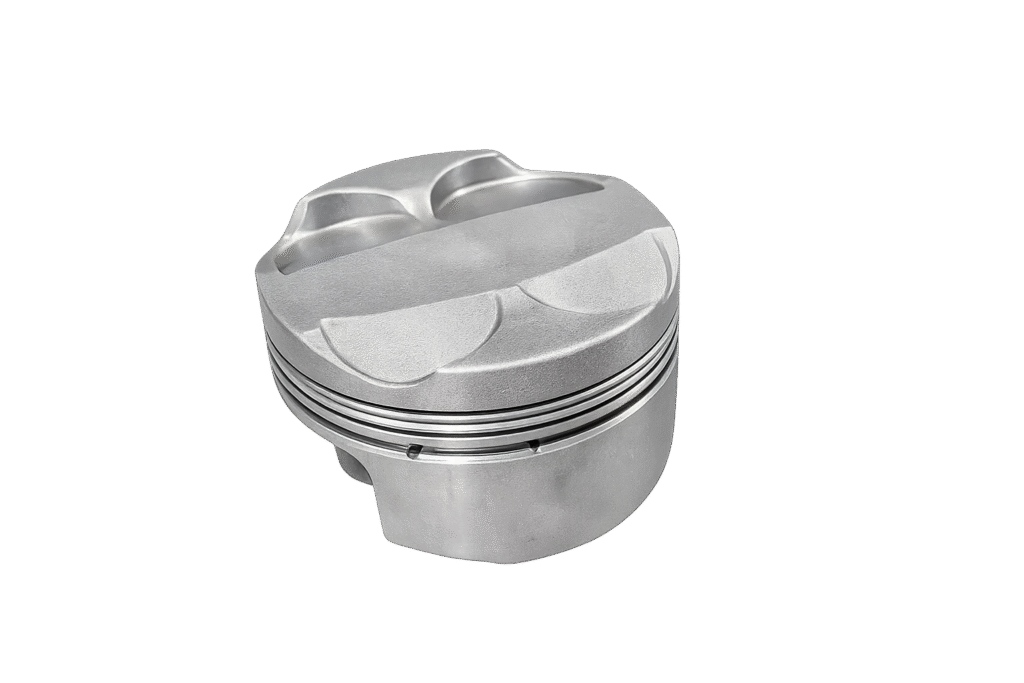
At the heart of this build are BMW S54B32 pistons. The primary reason for using these pistons is availability: they are easy to source as new OEM, used OEM, or aftermarket replacements. Coincidentally, they also represent the maximum practical bore size for the M42/M44 block, making them a logical choice for a stroker build.
These pistons integrate well with the rest of the piston and rod assembly, which helps keep the overall configuration relatively straightforward.
Piston Crown Modification
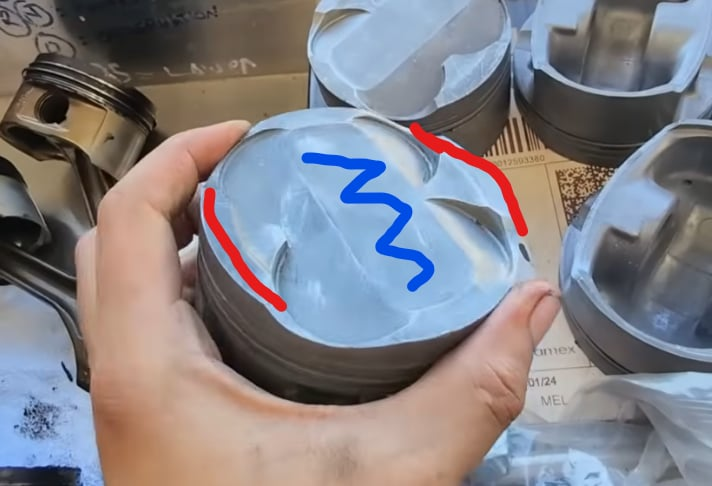
In standard form, the S54 piston crown is too tall for use in an M42/M44-based stroker. With no modification, the pistons protrude significantly past the deck height, making assembly impossible.
To correct this, the highlighted outer crown area must be machined down to match the height of the central (blue) reference area. Machining the piston in this way produces a static compression ratio of approximately 12.9:1 when used with a 1.53 mm (0.060″) head gasket.
For this build, reducing piston crown height by approximately 0.75 mm will result in roughly a one-point reduction in compression ratio. For example, machining the piston 0.75 mm lower than the reference surface would reduce compression to approximately 11.9:1.
Final compression ratio selection should be guided by camshaft choice and fuel type. Longer-duration camshafts with increased overlap reduce dynamic compression, allowing higher static compression ratios. Similarly, fuels with higher knock resistance—such as E85—permit higher compression ratios than conventional pump fuel.
Piston Rings
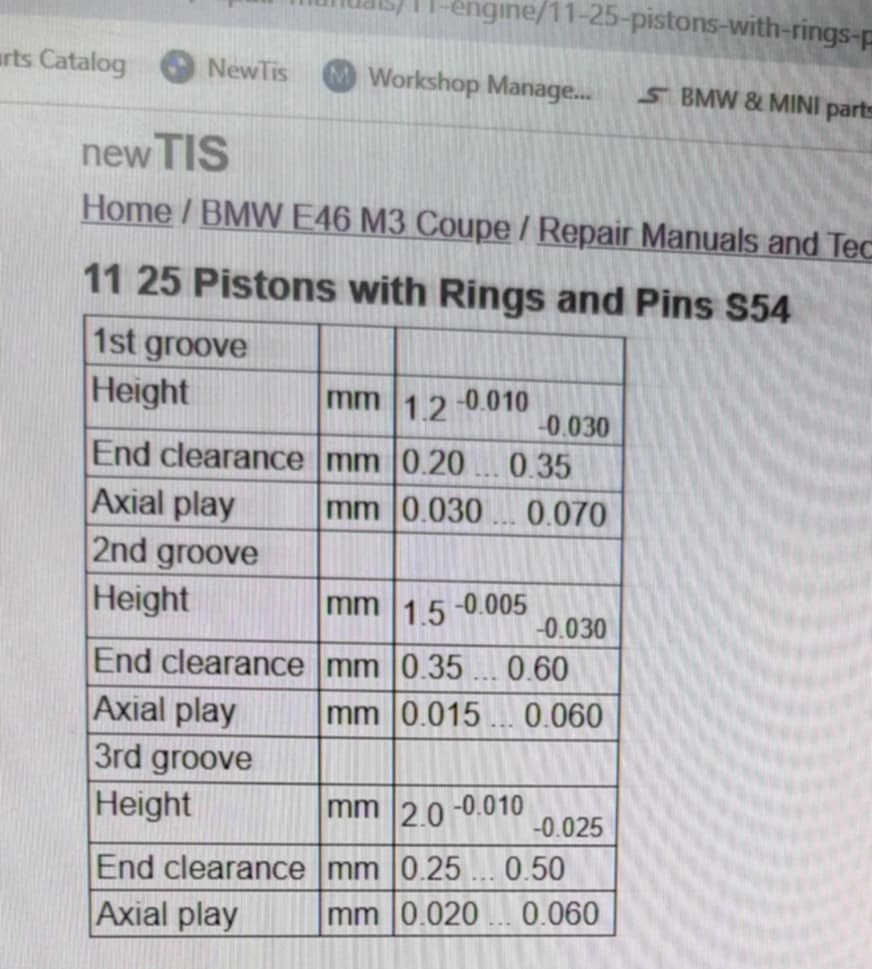
One advantage of using S54 pistons is the ability to retain OEM S54 piston rings, which are readily available and well characterised.
Ring gapping is where careful consideration is required. The optimal clearances depend on intended use, operating temperature, and fuel choice. It is strongly recommended to discuss ring gaps with your engine builder.
For engines intended for street use with occasional track work, retaining OEM ring clearances is a reasonable approach. This helps minimise blow-by and oil consumption while maintaining good cold and part-throttle behaviour.
Connecting Rods: Why B18C Rods Work
The connecting rods used in this build are modified Honda B18C rods. The B18C is a widely supported engine platform, making new, used, OEM, and aftermarket rods easy to source.
Once stroke is increased, connecting rod selection becomes a geometry problem, not simply a strength problem. For this build, 138 mm B18C rods were selected as they correctly match the modified piston compression height and the deck height of the M42/M44 block.
The small-end diameter matches the S54 gudgeon pin, which simplifies assembly and avoids the need for custom pins or bushings.
The B18C rods do require modification. In OEM form, the small-end width is approximately 23.45 mm, while the S54 piston pin boss width is 19.9 mm.
The rods must be machined to this width to ensure correct fitment within the piston, with adequate side clearance. This modification is essential to prevent binding and uneven loading during operation.
Weight Balancing
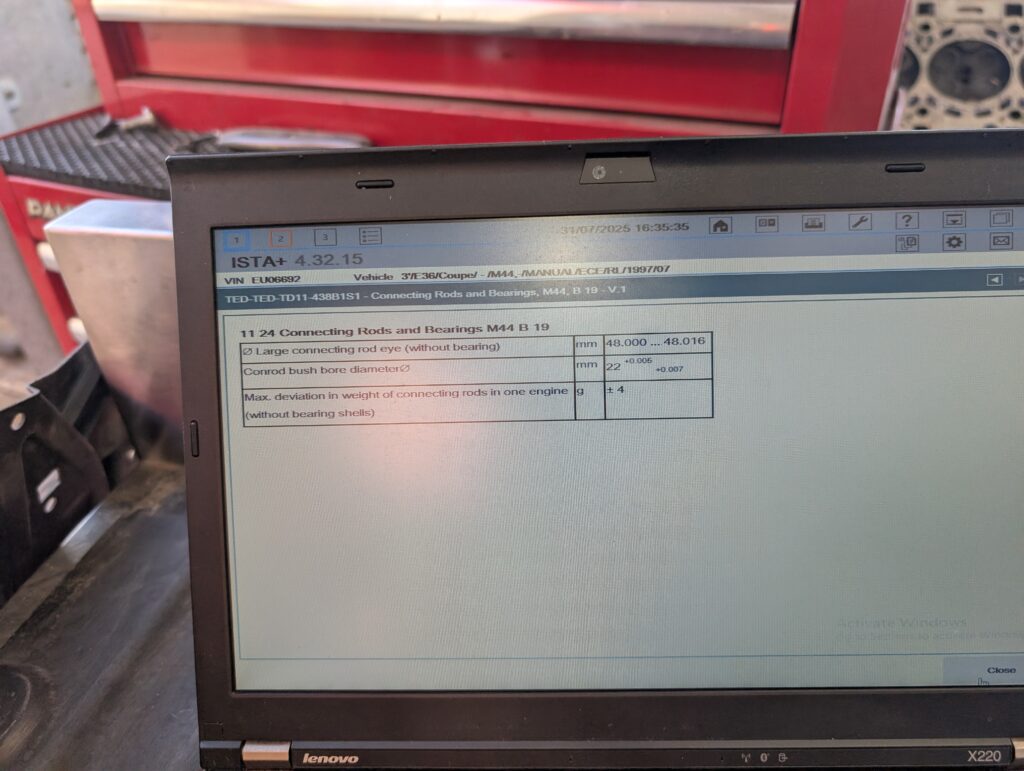
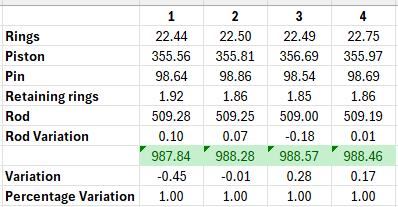
BMW’s OEM tolerance for mass variation between connecting rods is approximately 4 g. When assembling the piston and rod combinations yourself, this same 4 g target is achievable—and appropriate—for the complete reciprocating assembly.
Each piston, pin, ring pack, and rod assembly should be weighed, with material removed as required to bring all assemblies into alignment. The table below shows the actual mass variation achieved in this build.
Rod Bearing Clearances
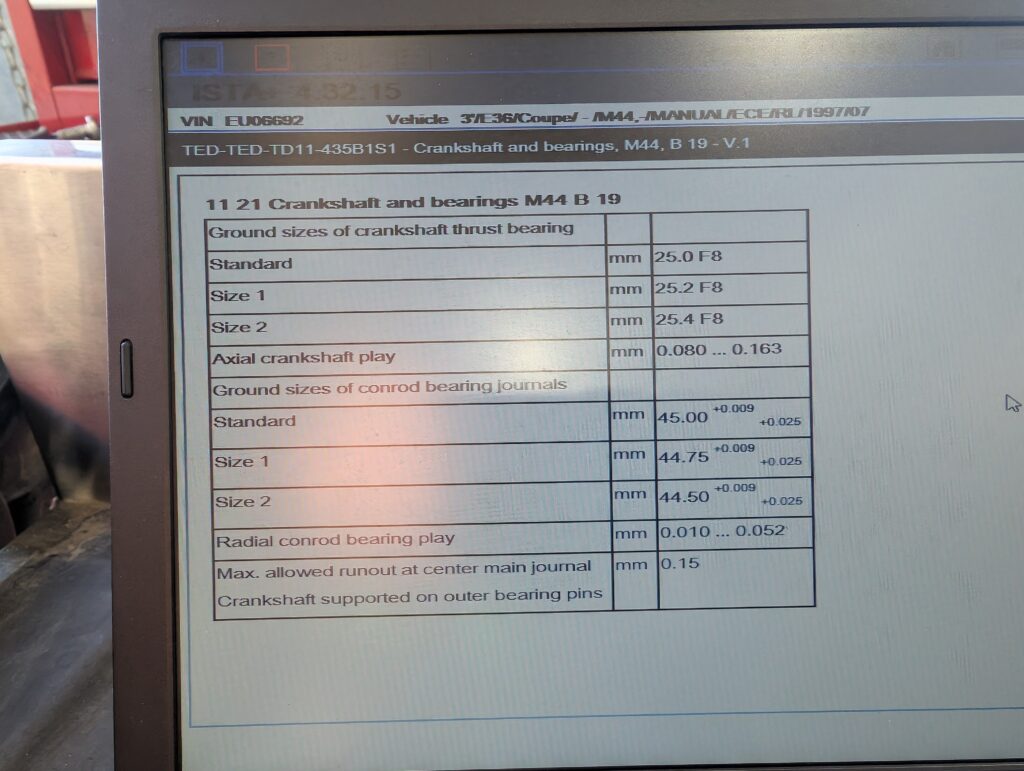
As with the crankshaft bearings discussed in the previous article, rod bearing clearances were targeted toward the upper end of the OEM specification.
For engines intended for motorsport-only use, looser clearances (2-3thou) may be appropriate. For a mixed street and track engine, OEM clearances are generally suitable and provide good oil control and longevity.
Clearance targets should always be discussed with your engine builder.
When sourcing bearings, ensure you purchase bearings compatible with the B18C connecting rods, not M42/M44 bearings, as the dimensions differ.
Conclusion
When executed correctly, the combination of S54 pistons, modified B18C connecting rods, and appropriately selected rings provides a robust and well-matched bottom end for an M42/M44 stroker build. None of the components used here are exotic on their own, but the way they are integrated—and the attention paid to geometry, clearances, and mass control—is what determines whether the engine is reliable or problematic.
Machining the piston crowns to establish a controlled compression ratio, selecting rod lengths that preserve sensible rod-to-stroke geometry, and setting ring and bearing clearances appropriate to the intended use are all critical steps. Skipping or approximating any of these decisions quickly undermines the rest of the build.
The result is a bottom end that supports higher compression, increased displacement, and sustained high-RPM operation while remaining suitable for real-world street and track use. As with the previous stages, the goal see here is not simply to increase output, but to do so in a way that is repeatable, measurable, and durable.