Block and Crank
If reading isn’t your favourite hobby, you can skip the article and go straight to the video on YouTube:
Block Choice
There’s ongoing debate about whether the M42 or M44 is the better foundation. In practice, both can be made to work, but for high-output street and track engines the M44 block has one clear advantage:
Factory oil squirters.
In the video I erroneously stated that only the M44 had oil squirters, but both blocks do. The difference is that the M44 has protruding squirters that better target the pistons than the squirters on the M42 block. These piston cooling jets spray oil onto the underside of the piston crown, dramatically improving thermal stability. That matters when you’re changing anything that will push the combustion temperature higher, such as boost or as in my case, high compression (12.6:1).
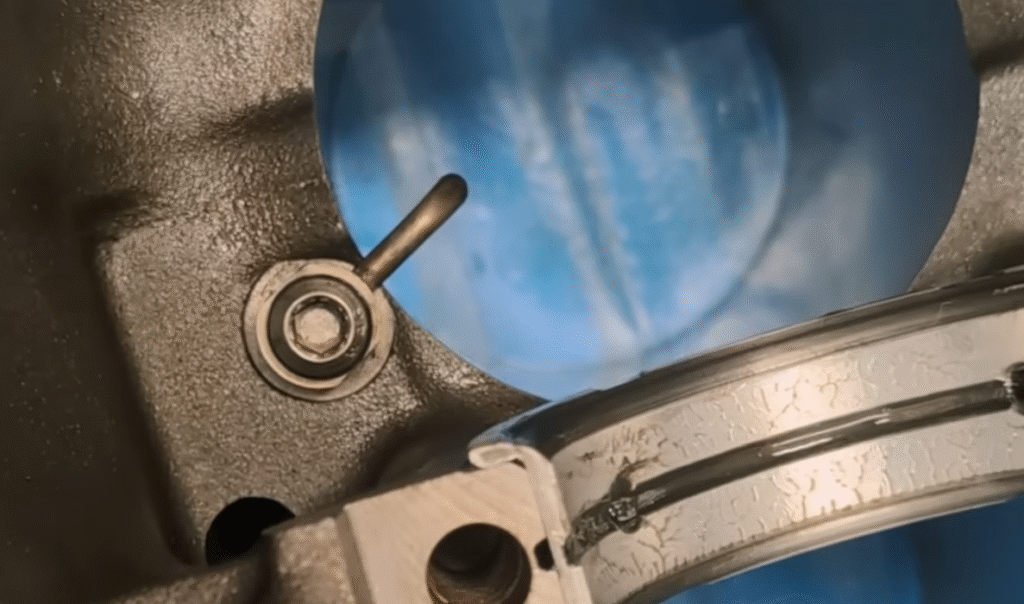
My block has been bored to 87mm (nominal) to suit the BMW S54B32 pistons (these will be further discussed in the next article). This only leaves a 4mm thick piston wall which for all practical applications, is effectively maxing out the amount of boring the block can handle. If you’re looking to turbo your build it is probably best to leave the bore stock.
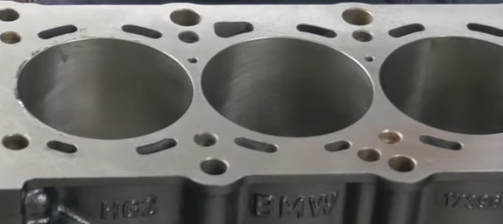
If you are following along with this build, and you do overbore your block, you will need to purchase an over-bored head gasket to match. There isn’t enough room on the factory gaskets to accommodate the change in bore. You can organise for a custom head gasket yourself, or you can purchase one that I have made custom just for this task
BMW M42/M44 Overbore Cylinder Head Gasket – Performance Replacement
The gasket is a multi-layer steel (MLS) head gasket, which offers several advantages over composite and single-layer custom gaskets:
Improved sealing under high cylinder pressure
MLS gaskets are far more resistant to combustion gas leakage, making them well suited to higher compression ratios and increased mean effective pressure seen in stroked or aggressively cammed engines.
Better bore edge integrity for overbored blocks
The embossed stainless layers provide defined sealing rings around each cylinder, ensuring consistent clamping even when the bore diameter exceeds factory specifications.
Greater tolerance to block and head movement
Aluminium cylinder heads and cast iron blocks expand at different rates. MLS gaskets accommodate this differential movement far better than composite gaskets, reducing long-term sealing fatigue.
Superior thermal stability
Stainless steel layers maintain their mechanical properties at elevated temperatures, helping prevent gasket degradation during sustained high-load or track use.
Consistent and repeatable clamp load
MLS gaskets rely on controlled embossing rather than compressible material, which means sealing performance is more predictable and less sensitive to heat cycling.
Compatibility with high-quality surface finishes
When used with correctly machined deck and head surfaces, MLS gaskets provide extremely reliable sealing without relying on excessive gasket crush or sealants.
Long-term durability
Unlike composite gaskets, MLS gaskets do not suffer from material creep or gradual compression loss, making them better suited to engines intended for repeated high-RPM use.
Crankshaft Selection
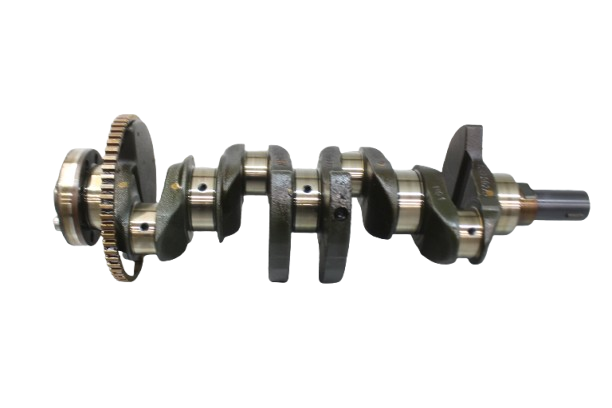
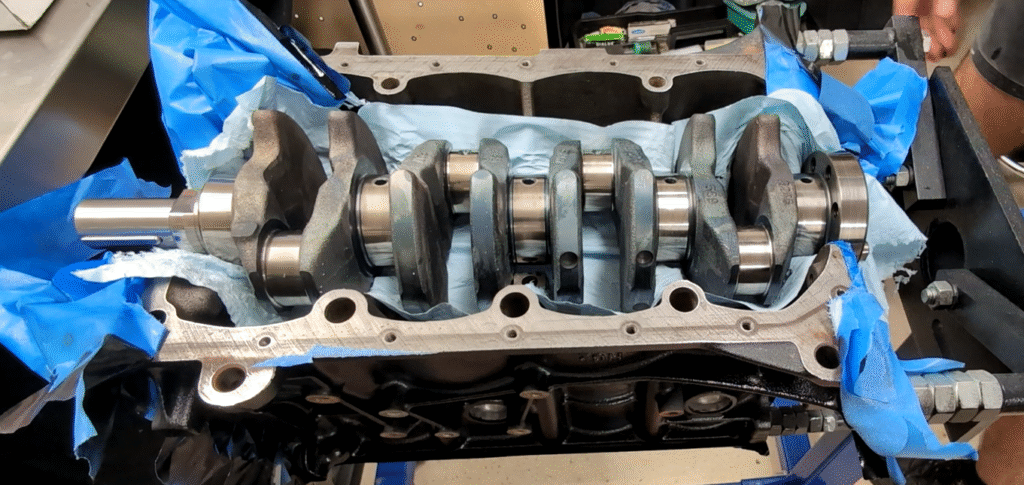
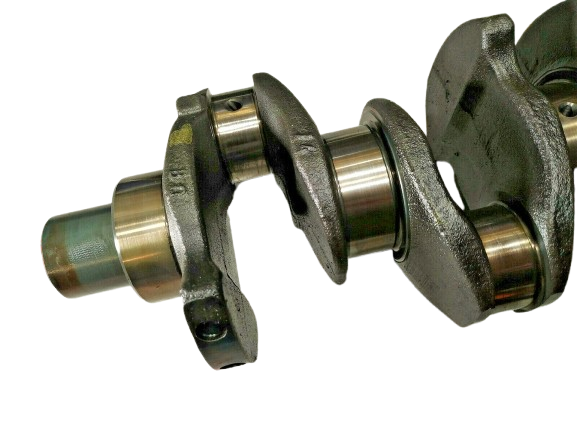
If you want to skip sourcing and modifying a used crankshaft, reach out to us and we can supply billet crankshafts for this application, otherwise there are three main crankshafts you can choose from:
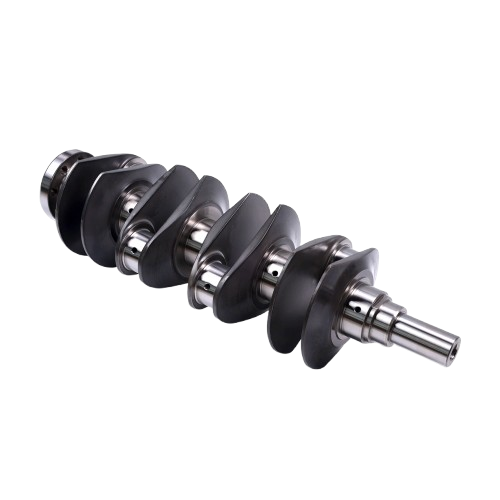
| Model | Stroke | Construction | Notes |
| M42 | 81mm | Forged, full counterweights | Not all M42 crankshafts are forged, though I’m not sure when/why this changed. It might be regional, or year based. If you want to use an M42 crankshaft, you should check. |
| M44 | 83.5mm | Cast, half counterweights, integrated timing wheel. | Much lighter than the M42, the weak point on this crankshaft is the timing wheel which will explode at higher RPM. |
| M47 | 88mm/90mm | 88mm, forged, full counterweights 90mm, cast, half counterweights, integrated timing wheel | The 88mm is the better choice, not because of the forging/casting, but the 88mm has a longer nose which is easier to modify for the M42/4 application. The 90mm crankshaft will need a new nose welded on. |
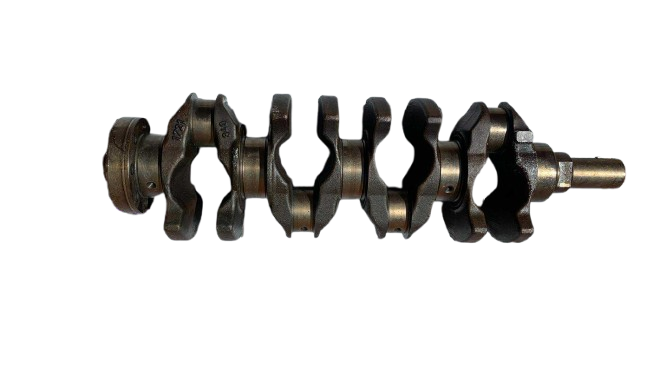
Required Machining and Modifications
The M47 crankshaft is not a drop-in part. Anyone claiming otherwise is either mistaken or skipping steps that matter.
- Crankshaft Nose Machining
The diameter of the M47 crank nose is larger than the M44 timing gear bore. To correct this, the nose must be turned down to approximately 31.5 mm, allowing the M44 timing gear to be installed as a controlled slip fit.
This operation must be concentric and accurate—this is not a job for guesswork. The best way to do this is to take your front chain timing gear with you to your preferred machinist and have them turn down the nose to match clearance of the original assembly.
- Cutting the Keyway
Once the nose diameter is corrected, a new keyway must be machined. This ensures the timing gear is positively indexed to the crankshaft, preserving valve timing accuracy under load.
Skipping or bodging this step is a guaranteed way to introduce timing instability.
- New Crank Bolt and Washers
You will need to purchase a different crank bolt to suit the new crankshaft as the M42/4 bolt will be too small. Because the crank geometry differs from the petrol engines, a custom machined washer is required to correctly centre the crank pulley bolt and maintain proper clamping force across the timing stack.
The part number for the correct crank bolt is 11-23-2-248-268 – Hex screw M18X1,5X102 for crankshaft pulley and below is a drawing for the matching custom washer with correct tolerances.
Crankshaft Balancing
Balancing is one of the most misunderstood parts of engine building. The M47 crankshaft is factory balanced by BMW, and this was done competently and accurately within the required tolerances. Unless you are working with a shop that has modern, calibrated balancing equipment and understands what they’re doing, there is a very real risk that an aftermarket balance will be less accurate than the original factory work. In countries like Australia, it is effectively guaranteed that a shop balance will be worse than a factory balanced part.
This is not to say balancing is never required—but it should be justified by component changes, not performed automatically because “that’s what people do.”
Main Bearing Clearances
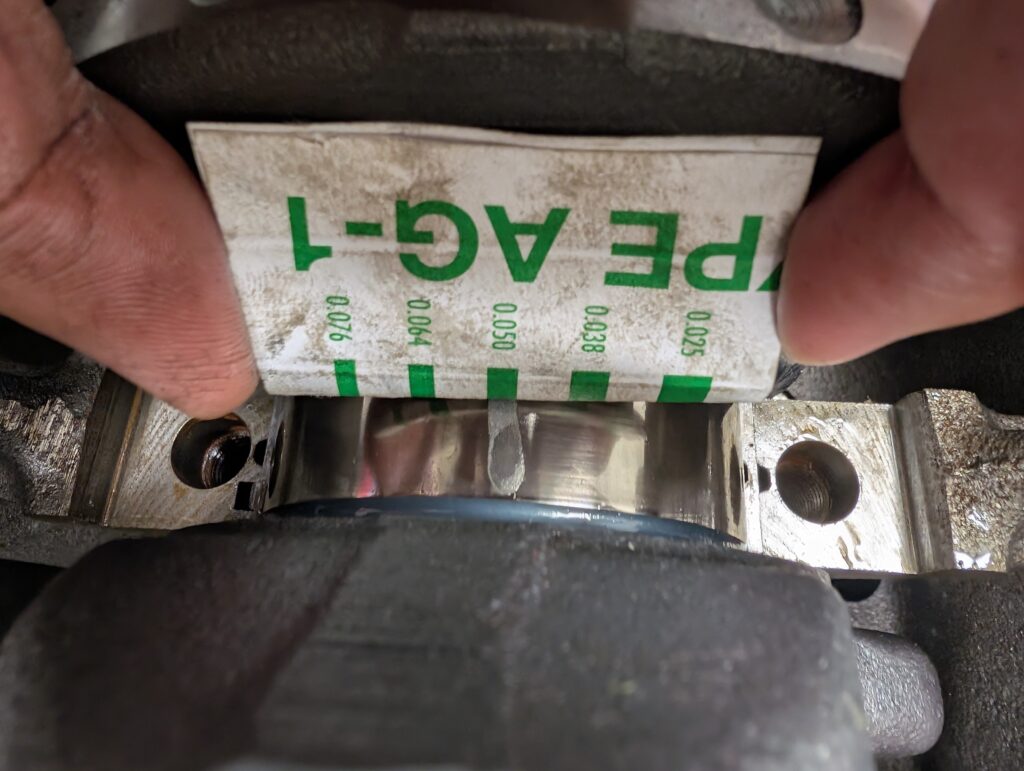
When installing the M47 crank into the M44 block, oil clearance must be verified. You can use OEM bearing shells for the main bearings as the fit is the same as the original crankshafts.
Below are the factory main bearing clearances for the M44 at 0.020-0.046mm clearance. If you’re using an engine builder, you should work with them on recommended clearances.
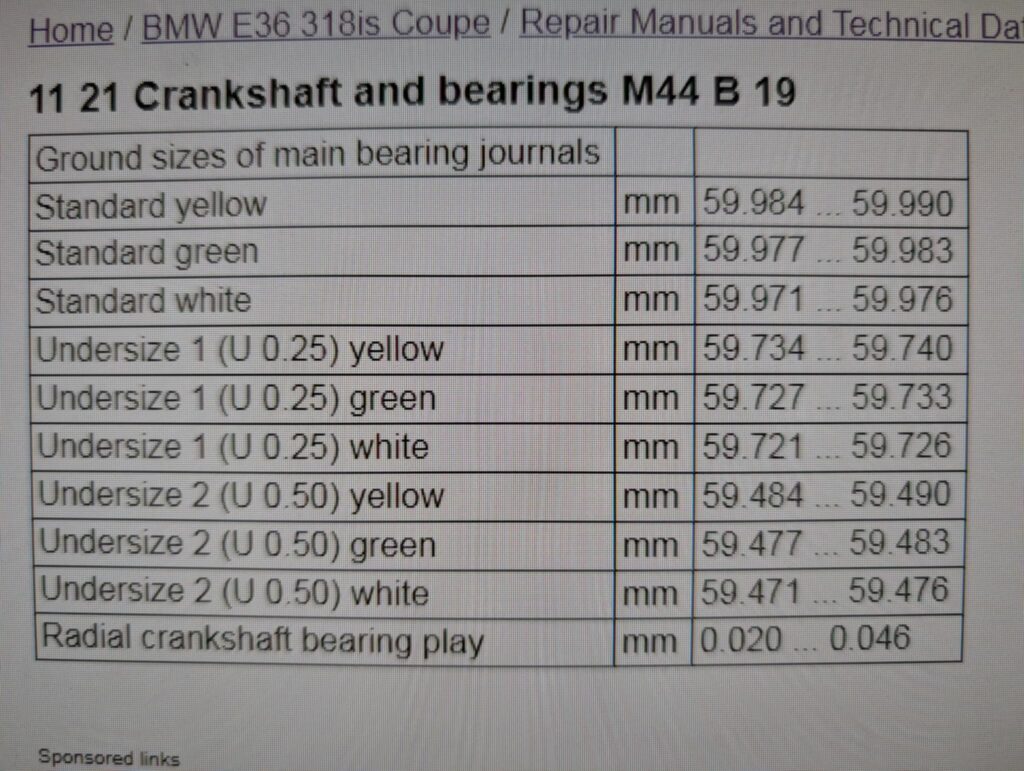
Running clearances that are too tight reduces oil film stability at high RPM and elevated temperatures and is much more of a consideration for motorsport builds where the engine will run hotter and higher RPM for longer. Typical motorsport clearances are 2-3thou (0.050mm-0.076mm). For my assembly which will see mixed use, my clearances are at 0.050mm. Running slightly looser clearances can be compensated for with thicker oil, but you can’t compensate for clearances being too tight.
Conclusion
The M47 crankshaft conversion is not experimental and is proven, even if the documentation for it has never been well compiled.
Combined with appropriate rod selection, compression ratio, and camshaft choice, this setup delivers the torque and drivability people expect from much larger engines without abandoning the lightweight, high-revving character that makes the M42/M44 platform so compelling.
The next stage of this build focuses on connecting rods and S54 piston integration.